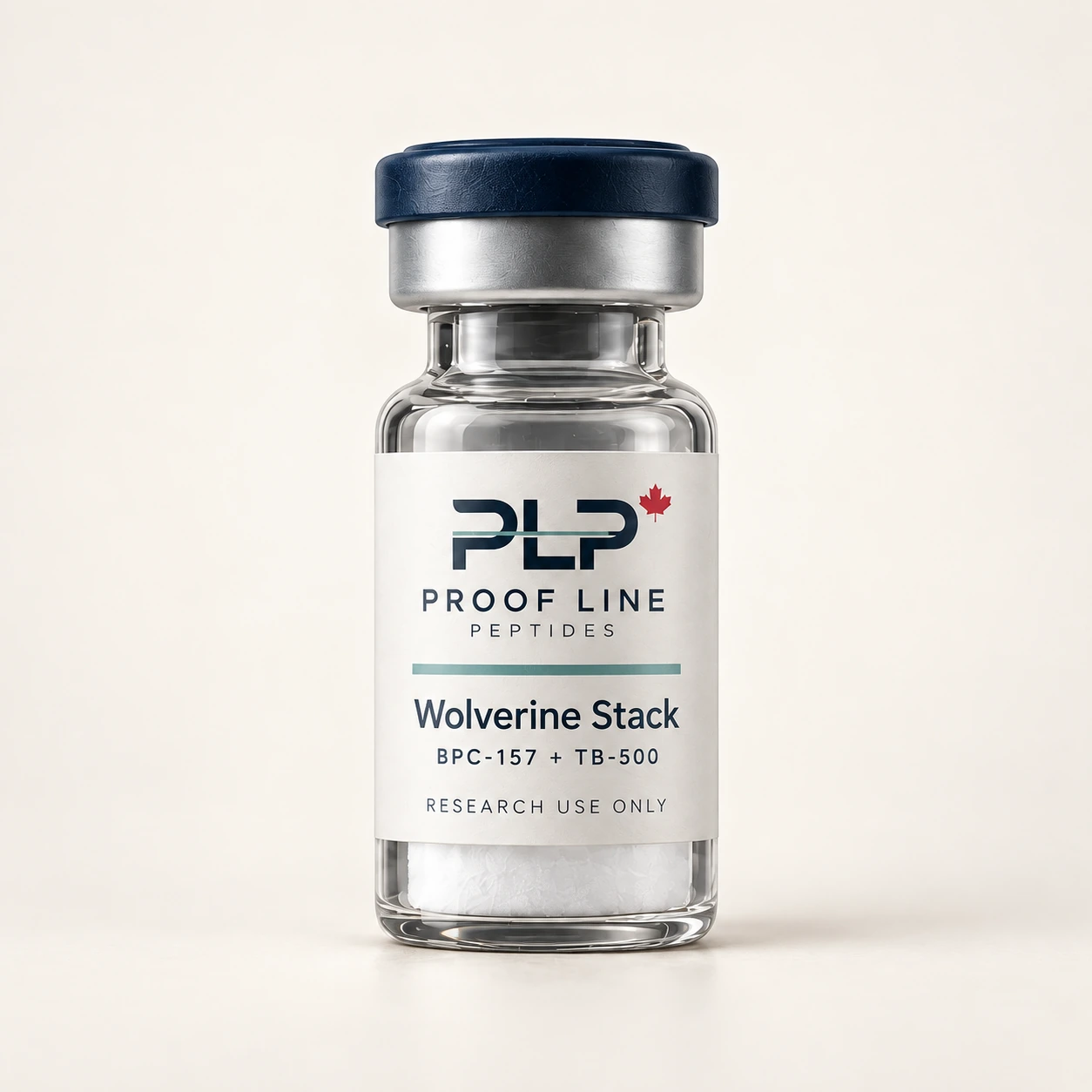
What is Wolverine Stack?
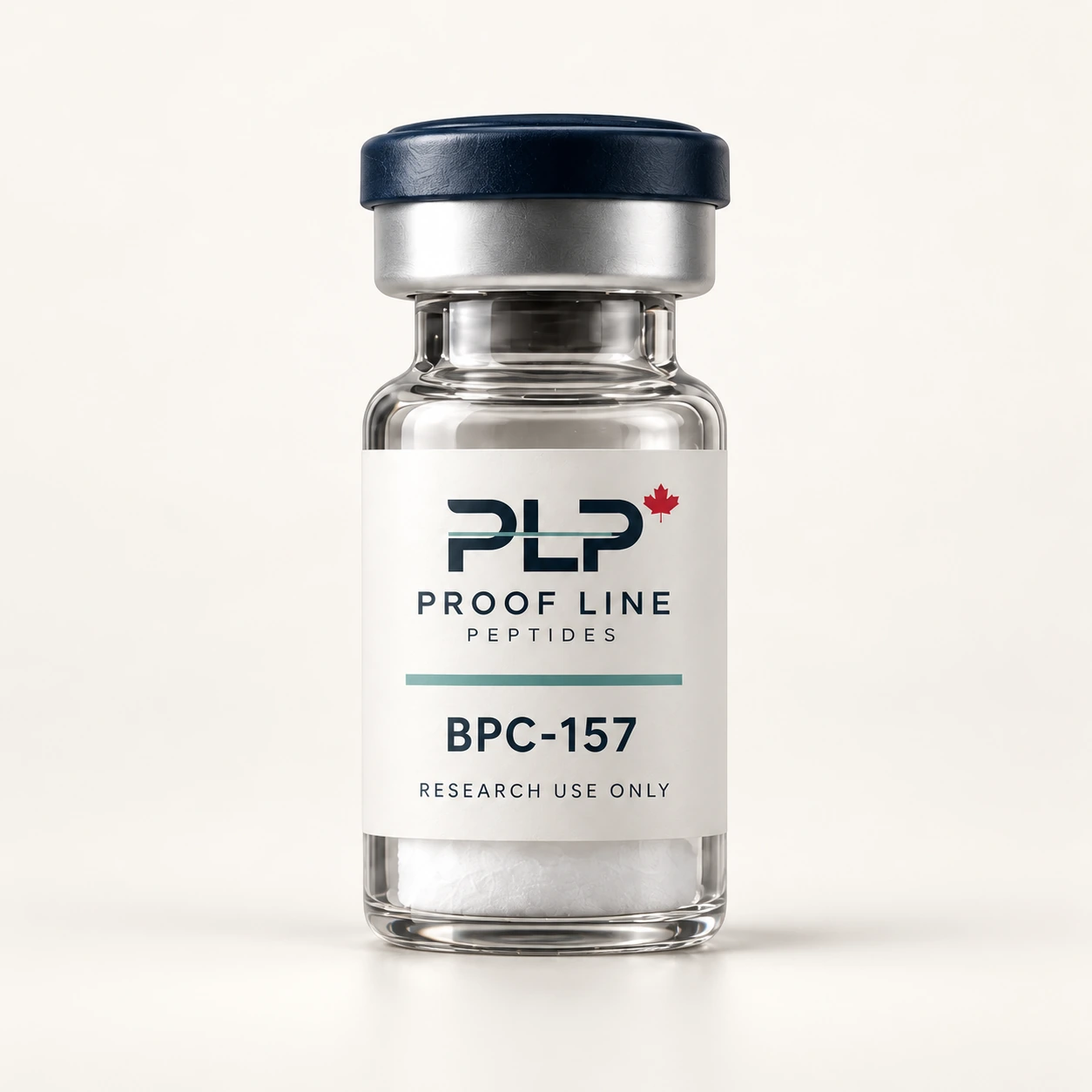
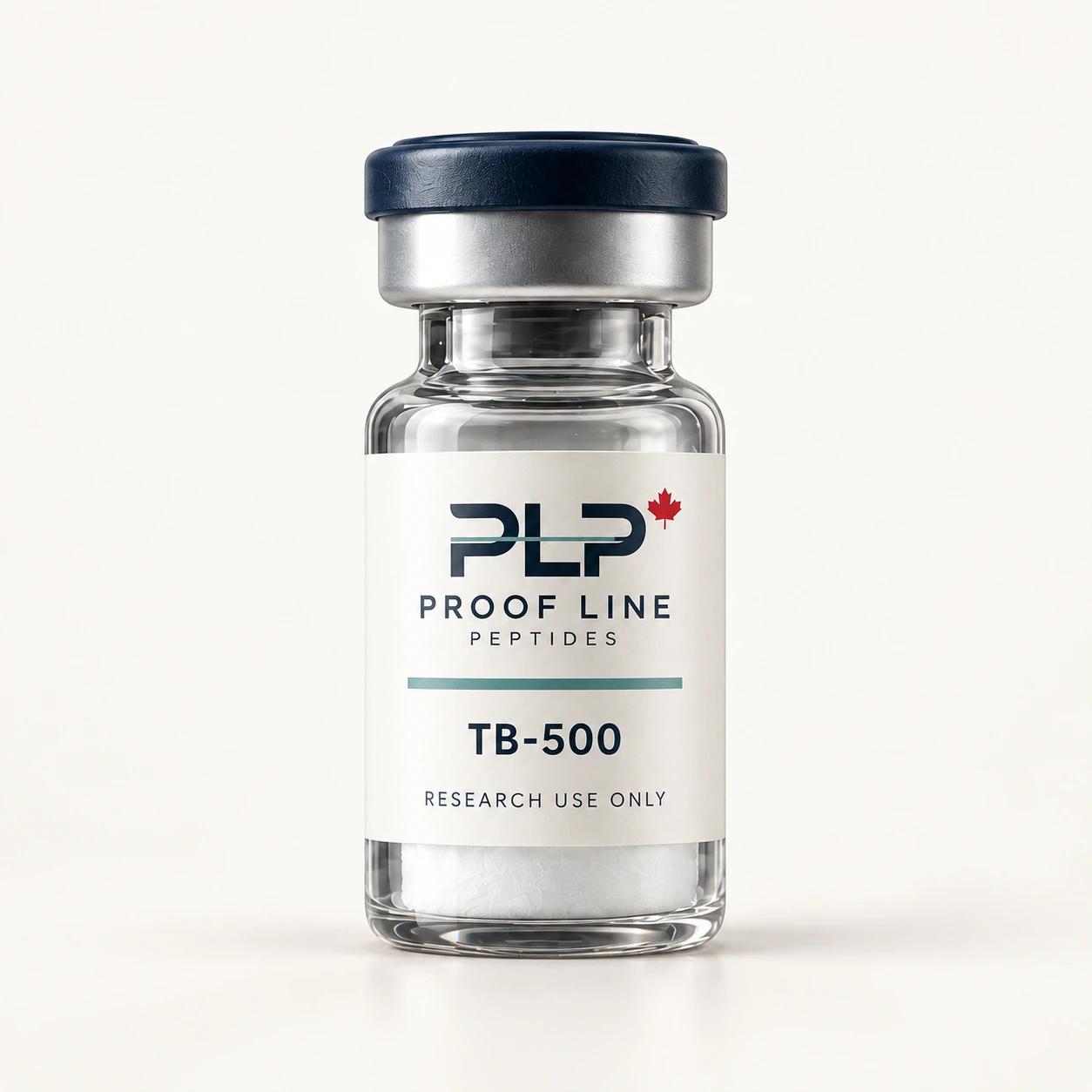
The label describes BPC-157 together with TB-500 at 10 mg. The nickname is branding: it names a combination, not a unique molecule, and it carries no scientific meaning.
Key concepts: Blend · Lot (batch) · Certificate of analysis (COA)
How it works and what researchers study
There is component literature for each peptide. BPC-157 appears in tendon-cell and tissue-repair work; thymosin beta-4 biology appears in animal wound-repair models. Reading them as two separate literatures keeps claims accurate.
What the evidence shows
BPC-157 work in rat tendon-derived explants and cells reported increased outgrowth, cell survival under stress and migration. Thymosin beta-4 research, with a synthetic actin-binding-domain peptide, reported promotion of dermal wound repair in diabetic and aged mice.
Limits of the evidence
- Cited component studies do not establish this blend’s effects in people.
- Component ratio and exact sequences for this blend are supplier-specified and not stated here.
- We also do not claim that no combination research exists anywhere — only that the studies we cite are component studies.
References
- Chang C-H et al. The promoting effect of pentadecapeptide BPC 157 on tendon healing involves tendon outgrowth, cell survival, and cell migration. J Appl Physiol. 2011. doi:10.1152/japplphysiol.00945.2010 View source
- Philp D et al. Thymosin beta 4 and a synthetic peptide containing its actin-binding domain promote dermal wound repair in db/db diabetic mice and in aged mice. Wound Repair Regen. 2003. doi:10.1046/j.1524-475x.2003.11105.x View source