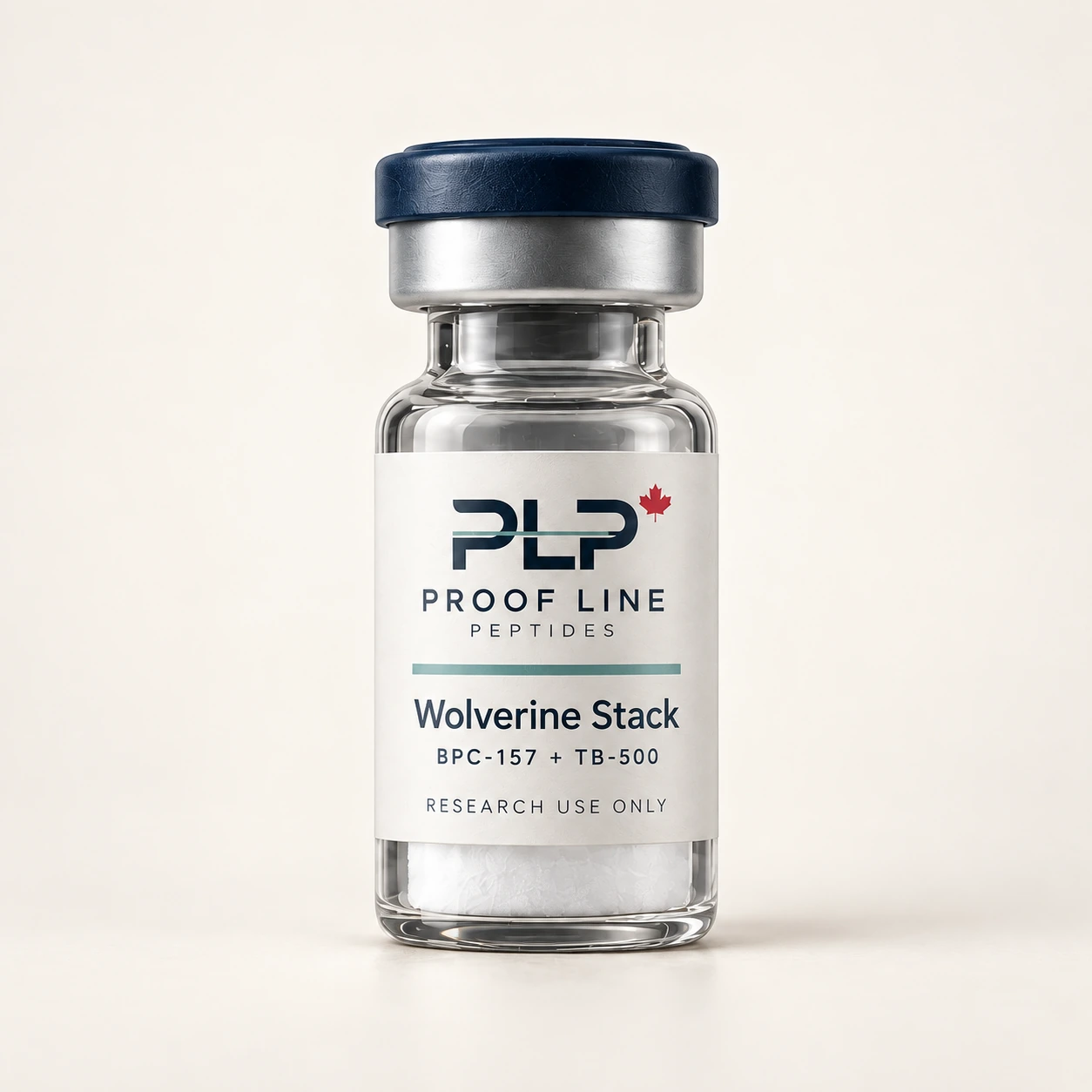
“Wolverine Stack” is a nickname for a blend labelled as BPC-157 with TB-500 at 10 mg. It is not a unique molecule and not evidence of synergy. The research we cite examined the components separately, which is exactly how the claims should be read.
What the label describes
Two named research peptides supplied together in one vial. A nickname can make a combination sound like a single studied entity; keeping the component names in front of the nickname prevents that slippage.
Component research, stated narrowly
BPC-157 work in rat tendon-derived explants and cells reported increased outgrowth, cell survival under stress and migration, with FAK and paxillin phosphorylation examined; proliferation was not reported as directly increased. [Chang et al., 2011]
Thymosin beta-4 research, together with a synthetic peptide containing its actin-binding domain, reported promotion of dermal wound repair in diabetic and aged mice. [Philp et al., 2003]
What the component studies cannot settle
They do not establish this blend’s effects in people. Nor should anyone assert that combination studies do not exist anywhere — that is a different claim, and not one these sources address. The accurate statement is that the cited component studies do not establish combined human effects.
Comparison table for blend listings
| Components | BPC-157 and TB-500 as named on the label |
|---|---|
| Quantity | 10 mg as listed; allocation between components not stated |
| Evidence type | Component-level preclinical research only |
| Documentation | Identity and lot-matched reports, where supplied |
Reading checklist
- Replace the nickname with the component names before evaluating any claim.
- Note that component evidence is not combination evidence.
- Record unstated ratio and sequence details as unknown.
- Avoid both synergy claims and sweeping “no research exists” claims.
Component evidence and combined evidence are different claims
Short answer: a blend inherits none of its components' studies automatically. Research on compound A alone and research on compound B alone are two pieces of single-compound evidence; they do not add up to evidence about A and B together, at whatever ratio a particular vial holds.
| What component studies support | Statements about that component, at the doses, species and conditions the study used. |
|---|---|
| What they do not support | Statements about a combination, an interaction, or an additive effect. |
| Why the ratio matters | The same two names at different ratios are different materials. Without a documented ratio, the per-component quantity is unknown. |
| What a blend listing can document | The combined quantity, the component names, and whatever the accompanying report actually measured — which may be fewer things than the listing implies. |
We do not publish a ratio for this listing, because no supplier document specifying one has been provided to us. Treat the component guides as background on each named compound, and treat the blend itself as an undocumented combination until a report says otherwise.