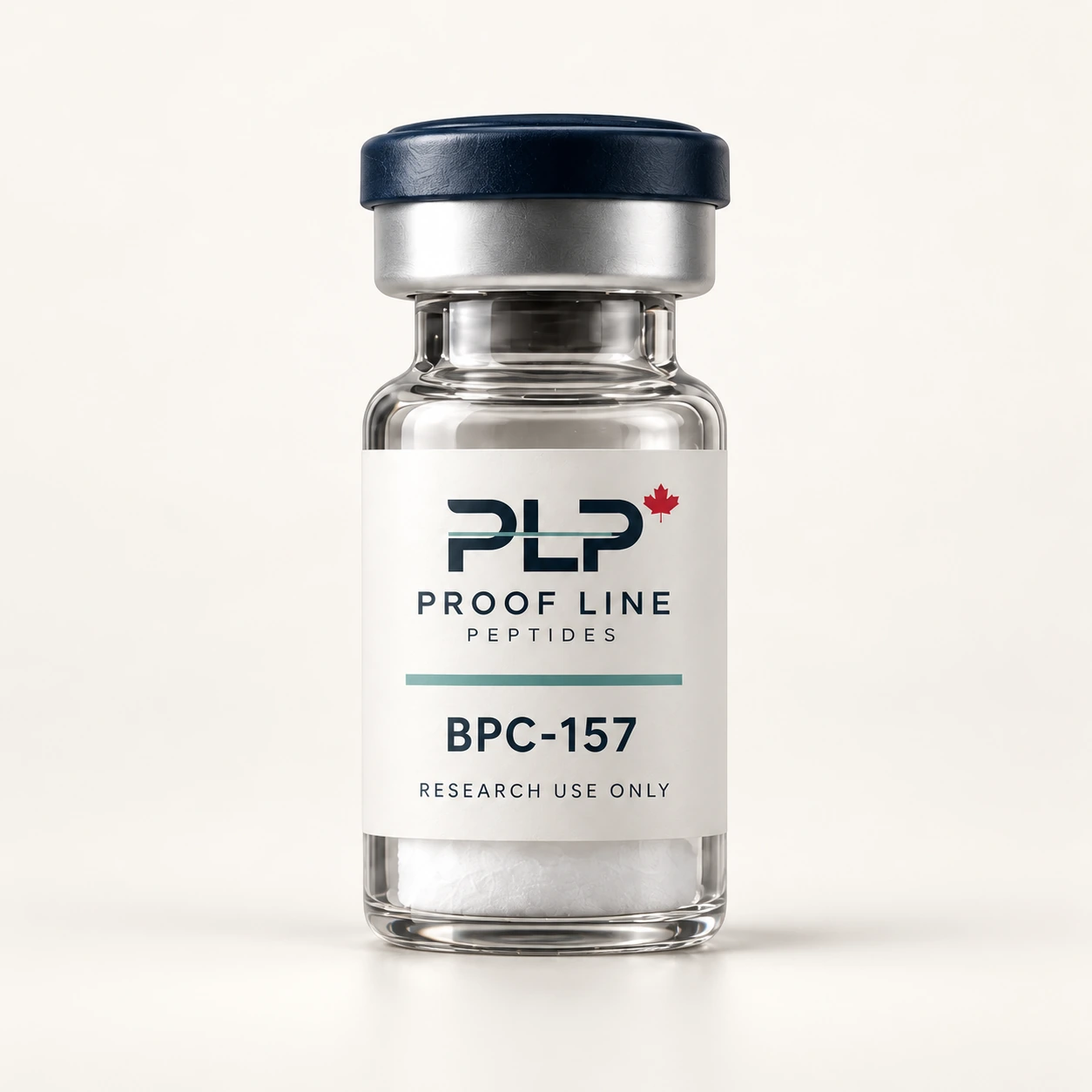
BPC-157 is a 15-amino-acid experimental peptide studied in tissue-repair models. The study highlighted here examined rat tendon-derived cells and tissue, so the defensible summary describes what changed in that preparation — not what happens to an injury in a person.
What the compound is
It is a short synthetic peptide of fifteen amino acids. Researchers are interested in it because it appears to change the behaviour of repair-related cells — whether they survive stress and how readily they move. It is supplied for laboratory research; the cited experiment does not establish treatment benefits in people, so descriptions should stay anchored to specific experiments.
What researchers have studied
A 2011 study used rat Achilles tendon-derived explants and cells. It reported increased tendon outgrowth, improved cell survival under stress and increased cell migration, and examined phosphorylation of FAK and paxillin as part of the proposed migration mechanism. Direct increases in cell proliferation were not reported. [Chang et al., 2011]
Read the pieces separately. Outgrowth and migration are measures of how cells behave in a controlled preparation. The signalling observations describe candidate pathways. Together they form a mechanistic hypothesis about tissue repair, which is the reason the compound remains of interest in preclinical work.
What the evidence does not show
Explant and cell work cannot establish tendon healing, pain relief or gut healing in people. Those claims require human trials with a defined population, a comparator, a clinical endpoint and reported harms — none of which this line of evidence provides. [Chang et al., 2011]
Reading checklist for BPC-157 claims
- Ask whether the source is a cell, animal or human study before accepting a summary.
- Check whether the claimed outcome was actually measured, or inferred.
- Treat “proven” language about human injury recovery as a red flag.
- Keep compound-level science separate from a specific vial’s documentation.
Documentation, not folklore
Because the science is preclinical, purchasing decisions rest on records: identity, quantity and lot-matched reports, plus the product-specific storage instructions supplied with the material. General storage guidance notes that formulation and handling can affect peptide stability, which is another reason to follow the supplied instruction sheet rather than a forum rule of thumb. [GenScript peptide storage and handling]
BPC-157 and TB-500 are not two versions of the same thing
Short answer: they are different molecules, studied by different groups, with different amounts and kinds of published evidence — and neither one's listing name tells you what a vial contains. Comparing them usefully means comparing four separate questions, not ranking them.
| What the name refers to | BPC-157 is a pentadecapeptide sequence derived from a gastric protein. “TB-500” is a product name used online, not a sequence designation. |
|---|---|
| Identity certainty from the name alone | BPC-157 names a defined sequence. “TB-500” does not: published analyses of products sold under that name reported a short N-acetylated fragment rather than full-length thymosin beta-4. |
| Kind of evidence most often cited | For BPC-157, laboratory and animal experiments — for example work on rat tendon-derived cells and tissue. For TB-500, much of the analytical literature comes from anti-doping and equine detection work, not efficacy trials. |
| What neither comparison establishes | Neither body of work tested a Proof Line Peptides vial, and neither establishes a human treatment benefit. |
A practical consequence: for BPC-157 the open question is usually whether the material in hand matches the named sequence and stated quantity. For TB-500 there is an additional open question before that one — which molecule the name is being used for at all. [Drug Testing and Analysis, 2012]