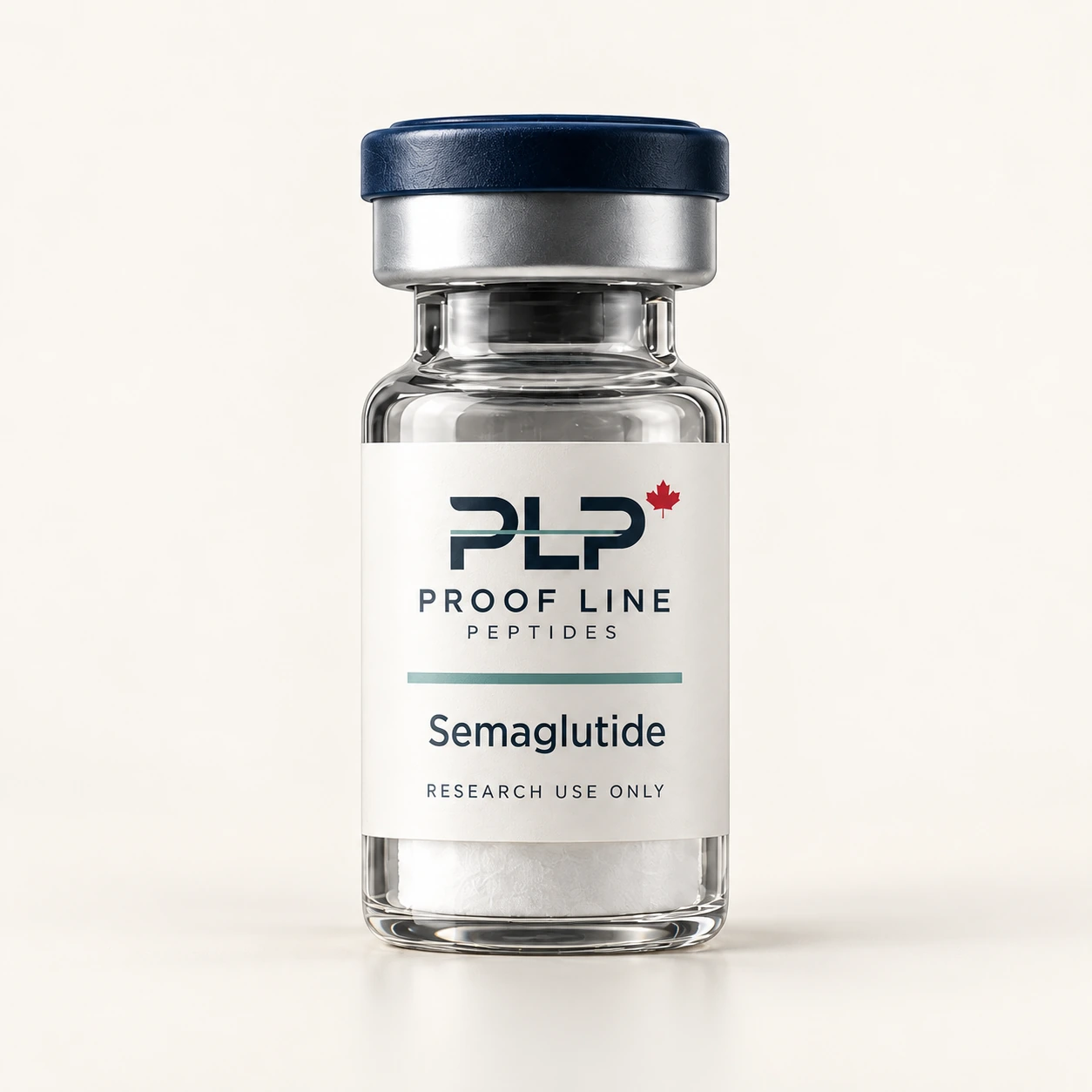
Semaglutide is described in official United States labelling as a GLP-1 receptor agonist that decreases calorie intake through an effect on appetite, and that separately lowers blood glucose through glucose-dependent insulin and glucagon actions. A separate 68-week randomized trial measured body-weight outcomes in adults with overweight or obesity without diabetes. The mechanism and the outcome come from different documents, and both describe approved pharmaceutical products rather than research material. [US semaglutide 2.4 mg prescribing information][Wilding et al., 2021 (STEP 1)]
Two effects the label keeps separate
It helps to read the label as describing two different jobs rather than one chain of events. Appetite is one; blood glucose is the other. Collapsing them produces the common mistake of explaining reduced eating as a consequence of insulin and glucagon changes.
| Appetite and calorie intake | Labelling states that GLP-1 regulates appetite and calorie intake, that GLP-1 receptors are present in brain regions involved in appetite regulation, and that semaglutide decreases calorie intake likely through an effect on appetite. |
|---|---|
| Blood glucose | Labelling separately describes glucose-dependent insulin secretion and reduced glucagon secretion, which lower blood glucose. |
| Gastric emptying | Described separately again as a delay in gastric emptying — not as the stated cause of the appetite effect. |
Both descriptions are taken from official United States labelling. Gastrointestinal adverse reactions are listed in the labelling and belong in any balanced summary. [US semaglutide 2.4 mg prescribing information][US semaglutide prescribing information]
Outcomes, as the trial reported them
The STEP 1 trial, published in 2021, studied 1,961 adults with overweight or obesity without diabetes over 68 weeks alongside a lifestyle intervention, reporting body-weight reduction and gastrointestinal adverse effects. [Wilding et al., 2021 (STEP 1)]
Three boundaries worth keeping
| Jurisdiction | United States labelling is not Canadian authorization evidence; check the Canadian database record separately. |
|---|---|
| Population | Trial findings belong to the enrolled population and its duration. |
| Product identity | A research vial is not Ozempic or Wegovy, and is not an approved medicine. |
Checklist
- Separate mechanism sources from outcome sources.
- Name the jurisdiction of any label you cite.
- Quote the population and duration with every outcome claim.
- Verify Canadian product status in the Drug Product Database.
Where Canadian status is checked
Use the specific Health Canada Drug Product Database record for the product in question. Matching an ingredient name is not the same as establishing that a given vial is authorized. [Health Canada Drug Product Database]
Semaglutide and retatrutide: which receptors, and what that does not settle
Short answer: they are described as acting at different numbers of receptors — semaglutide at the GLP-1 receptor, retatrutide reported as acting at GLP-1, GIP and glucagon receptors. Receptor count is a mechanism description. It is not a ranking, not a safety statement, and not a claim about which performs better for anyone.
| Semaglutide | Described in approved labelling as a GLP-1 receptor agonist. Labelled effects on appetite, blood glucose and gastric emptying are described separately in that labelling, not merged into one mechanism. |
|---|---|
| Retatrutide | Reported in a 2023 clinical report as acting at GLP-1, GIP and glucagon receptors. |
| What the comparison establishes | A difference in described receptor targets. |
| What it does not establish | That more receptor targets is better, that outcomes in one programme predict another, or the current regulatory or trial status of either — a 2023 report describes 2023. |
Receptor activity and clinical outcomes are separate questions, answered by separate evidence. Nothing here is a recommendation, a comparison of benefit, or a statement about a Proof Line Peptides vial. [Jastreboff et al., 2023][US semaglutide 2.4 mg prescribing information]